The term dementia praecox was gradually replaced by the term schizophrenia, which initially had a meaning that included what is today considered the autism spectrum. The shift from Emil Kraepelin’s term dementia praecox to schizophrenia – coined by Swiss psychiatrist Eugen Bleuler in 1911 – radically altered the diagnostic landscape. Bleuler actually introduced the word “autism” to describe a core symptom of schizophrenia, long before it became its own distinct diagnosis.
THE EVOLUTION OF THE TERMS
Dementia Praecox: Originally coined by Emil Kraepelin to describe early, rapid cognitive deterioration in late adolescence or early adulthood.
Schizophrenia: Bleuler replaced this because he noticed the disease did not always lead to permanent dementia and does not solely affect young people. He defined the condition as a “splitting” (schizo) of the mind (phrenia).
The Root of “Autism”: Bleuler used the word autism (derived from the Greek autos, meaning “self”) to describe a severe withdrawal from reality and social interaction—a symptom he believed was central to schizophrenia. Because of Bleuler’s work, children who exhibited profound social withdrawal and isolation in early life were routinely diagnosed with childhood schizophrenia well into the mid-20th century.
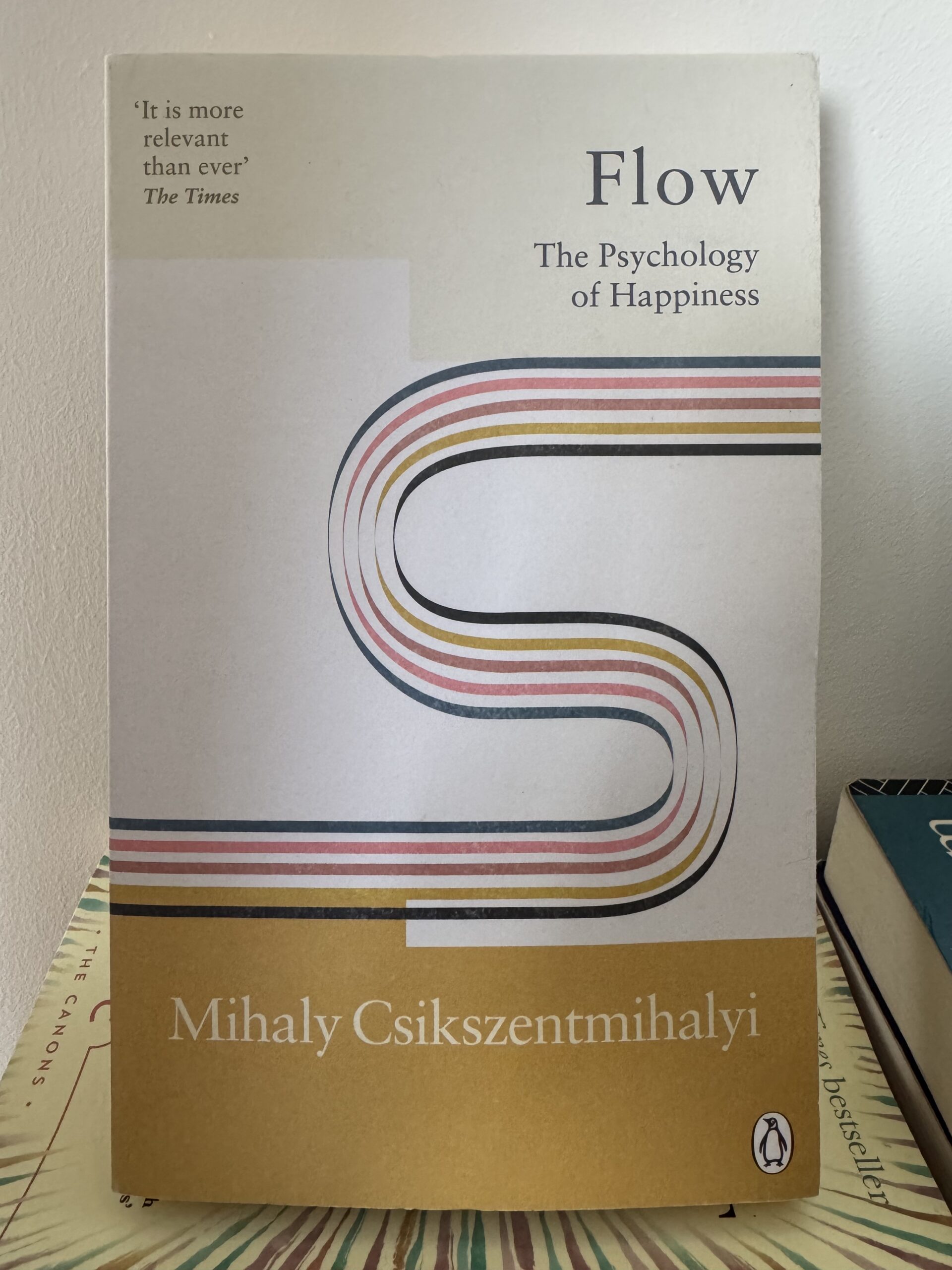
Flow: The “flow state,” often referred to as being “in the zone,” is an optimal state of consciousness where you feel your best and perform at your peak. It is a mental condition of complete immersion, intense focus, and enjoyment in a specific activity. Developed by psychologist Mihaly Csikszentmihalyi, the term was first coined in 1975 in his book Beyond Boredom and Anxiety.
In the earlier editions of the American Psychiatric Association’s Diagnostic and Statistical Manual of Mental Disorders (DSM-II), conditions that we now recognize as autism were explicitly classified as “schizophrenia, childhood type”. It wasn’t until the publication of the DSM-III in 1980 that autism was fully conceptualized as an independent disorder, finally uncoupling it from the schizophrenia diagnosis.
Autism and schizophrenia are linked but are two separate disorders. As schizophrenia inhibits a complete loss in control over the contents of consciousness. Whereas people with autism may inhibit extreme control over the contents of their own consciousness, being able to direct their attention and focus like a lazer.
Therefore each of these live at complete opposite ends of their spectrums. One cannot control their experience. And the other is always in control of their experience. Therefore, while linked, these two states of experience are diametrically opposed.
WHY DO THESE AUTISTIC INTERESTS HAPPEN?
Autistic individuals generally find that deep engagement with their passions provides several important benefits. From comfort and calm by focusing on dedicated interests can bring on much needed order, predictability, enjoyability. It is therefore stress relief to them in an otherwise overwhelming and sometimes chaotic world. Having control over what goals they wish to achieve and what to do with their lives is almost an art they cultivate from this time spent in deliberate solitude. The reason for their unsociability is simply because they are always far too busy.
Many autistic people also have a predisposition to experience monotropism, and that leads them to experiencing the everyday of their life with activities that are deeply stimulating and rewarding, providing immersive engagement through constant learning and challenges. And what emerges from all this activity is experiencing extremely euphoric hyper focused altered states of consciousness. They have easier access into “flow states” where they experience time dilation, almost daily, losing all sense of time, momentarily forgetting themselves, which allows them to get rapturously caught up in their tasks. That then leads them into achieving incredible levels of productivity, and knowledge.
Their ability to enter these flow states on command is the source code of their intrinsic motivation, why they continue to do what they do. And this process of constant challenge ultimately leads them to greater levels of creativity and increased intelligence.
Want to know how to control consciousness and determine the quality of your own life?
It’s simple:
FLOW = CONTROL OVER THE CONTENTS OF CONSCIOUSNESS

